Budget and prices
What a bag costs per wear, and when the cheap one costs more
Divide by wears, not by years. The arithmetic that shows when a $120 bag beats a $45 one, what a repair is worth, and where resale changes the answer.
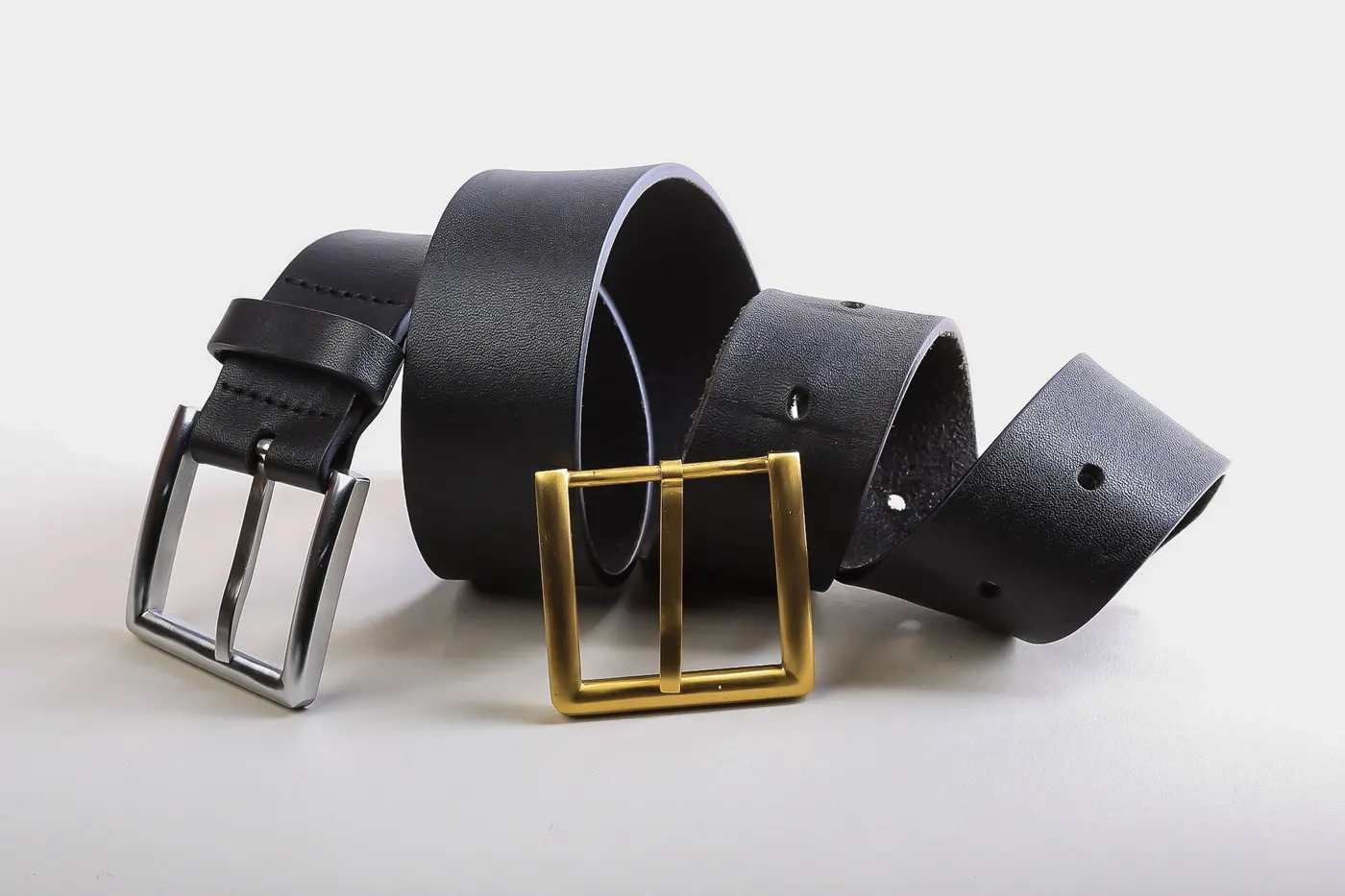
A price tag answers a question nobody asks twice. What you actually pay is the price divided by the number of days the bag leaves the house, and that denominator is set by how long the bag survives rather than by what it cost.
This guide does the division in front of you, for bags and for the smaller accessories that sit alongside them. Every price is an example chosen to show the shape of the arithmetic; prices change weekly, differ by seller, and are not quoted by this site.
Wears, not years, is the denominator
Start by fixing how often the bag is used. A bag carried to work on a five-day week, allowing two weeks off, leaves the house about 250 days a year. A weekend-only bag might see 60 days a year. A travel pack used for four trips of 6 days each sees 24 days a year. Those three denominators are so different that the same bag can be an expensive purchase and a cheap one in two households.
Then fix the years. This is the number buyers guess at and the number that moves the answer most. A $120 bag at 250 days a year costs about 48 cents a wear if it lasts one year and about 10 cents if it lasts five. Nothing about the bag changed; only the assumption did.
The cost-per-wear calculator on this site takes your own days-a-year figure, because the national average of anything is a poor proxy for a commute you can count.
| Example price | Years kept | Wears | Cost per wear |
|---|---|---|---|
| $45 | 1 | 250 | $0.18 |
| $60 | 2 | 500 | $0.12 |
| $120 | 5 | 1,250 | $0.10 |
| $250 | 10 | 2,500 | $0.10 |
| $400 | 10 | 2,500 | $0.16 |
Each cell is price divided by 250 times years, with nothing subtracted for resale. The $250 and $120 rows land on the same figure, which is the whole point: price and cost per wear are different measurements.
The replacement trap
Buying the cheapest bag repeatedly is not the same decision as buying it once. Over 10 years at 250 days a year, a $45 bag replaced annually costs $450 and gives 2,500 wears. Two $120 bags over the same decade cost $240 for the same 2,500 wears. The cheaper purchase is $210 more expensive by the end, and it also involves nine more shopping decisions.
The assumption doing the work there is that the $45 bag lasts one year and the $120 bag lasts five. That is an assumption, not a measurement, and it is the one to interrogate before anything else. Zippers, strap anchors and the base seam are where bags fail; a bag with a sewn-through base panel and a named zipper gauge has a plausible five-year claim, and a glued base does not.
The direction of the error matters too. Overestimating the life of a cheap bag by a year changes its cost per wear from 18 to 9 cents. Overestimating the life of an expensive bag by a year barely moves it, because the denominator is already large. Uncertainty hurts the cheap purchase more.
- Ten years of $45 bags replaced annually: $450 for 2,500 wears, about 18 cents a wear
- Ten years of $120 bags replaced every 5 years: $240 for 2,500 wears, about 10 cents a wear
- The gap over the decade is $210, on example prices and assumed lifetimes
- Failures cluster at zippers, strap anchors and the base seam, so those are the three places to inspect before buying
Repairs change the arithmetic more than discounts
A replacement zipper on a $120 bag at an example $25, adding 3 more years of use, turns a $120 five-year bag into a $145 eight-year bag. At 250 days a year that is 2,000 wears, about 7 cents a wear, against 10 cents without the repair. A 30 percent discount on the original purchase would have taken it to 7 cents as well, and discounts are not available on demand in year five while repairs are.
This is also why a bag whose label carries a company name or a registered identification number is worth more than an unlabelled one at the same price. The identity on the label is the route to a replacement buckle or a zipper slider, and those two parts account for most of the repairs a daily bag needs.
Resale is the other end of the same idea. Selling a $120 bag for $40 after 5 years makes the net cost $80 over 1,250 wears, about 6 cents a wear. Resale is realistic for bags with a traceable maker and unrealistic for unbranded ones, which is a cost difference that never appears on the tag.
| Change | Total spend | Wears | Cost per wear |
|---|---|---|---|
| Kept 5 years, no repair, no resale | $120 | 1,250 | $0.10 |
| Zip replaced at $25 in year 5, kept 8 years | $145 | 2,000 | $0.07 |
| Kept 5 years, sold on for $40 | $80 | 1,250 | $0.06 |
| Bought at 30 percent off, kept 5 years | $84 | 1,250 | $0.07 |
All four rows use 250 wears a year. The repair and the resale rows are the only two you can still act on after the purchase.
Accessories have their own denominators
A belt and a wallet are worn far more often than any one bag, so their arithmetic looks different. A belt worn 150 days a year for 8 years is 1,200 wears; at an example $55 that is about 5 cents a wear. A wallet carried 330 days a year for 6 years is 1,980 wears; at an example $70 that is about 4 cents.
Those figures are low enough that the material question stops being a budget question. The practical limit on a leather belt is the stitching at the buckle fold and the holes, not the leather, and on a wallet it is the card slots stretching rather than the outer panel wearing through.
The exception is anything bought for one occasion. A bag used for four trips of 6 days a year is 24 wears a year; at $180 kept 8 years that is 192 wears and about 94 cents a wear, nearly ten times the daily pack. Low use, not low quality, is what makes an occasional bag expensive.

Reading the label as a cost signal
The Federal Trade Commission's Leather Guides state that where a product has the appearance of leather, that appearance is an implied representation that it is leather, and that non-leather material which looks like leather should be disclosed as not leather, imitation leather, simulated leather, vinyl, vinyl coated fabric or plastic. A product that uses none of those words and none of the word leather either is usually a coated fabric, and coated fabrics fail by delaminating rather than by wearing, which tends to be sudden.
On fabric bags, the Textile and Wool Acts labeling requirements mean the named fibers each account for at least 5 percent of fiber weight, listed in descending order, with the rest shown as other fiber. A panel listed as 100 percent polyester tells you the face fabric; it says nothing about the coating or the thread, which is where the water resistance and the seam strength actually live.
Neither rule promises durability. They promise that the words on the label mean specific things, which is enough to compare two bags honestly and to keep an assumed lifetime from being wishful.
Before you buy
- Count the days a year you will actually carry the bag before comparing any two prices
- Write down the years you expect to keep it, then halve it and see whether the choice still holds
- Inspect the zipper, the strap anchors and the base seam, because those are where bags fail
- Look for a company name or registered identification number on the label, as the route to spare parts
- Price a zipper replacement in your area and add it to the arithmetic as a planned cost
- Put your own figures into the cost-per-wear calculator rather than using the examples above
Questions readers ask
- How many wears a year should I assume for a work bag?
- Count your own. A five-day week with two weeks off is about 250 days a year; three days in the office is about 150. Hybrid schedules are the main reason a bag that looked cheap per wear in 2019 arithmetic no longer is, because the denominator fell by 40 percent while the price did not.
- Is leather cheaper per wear than fabric?
- Not by material alone. A leather bag tends to last longer and weigh more, and the weight is why some owners stop carrying it, which ends the arithmetic early. The decisive numbers are the years you keep it and the days a year you carry it, and a heavy bag quietly reduces the second one.
- Does a warranty change the cost per wear?
- Only if it covers the parts that fail. Zippers, buckles and strap anchors account for most repairs on a daily bag; a warranty excluding wear and tear usually excludes exactly those. A policy that supplies replacement buckles and zipper sliders is worth more than a longer policy that replaces nothing.
- What is a repair worth in cents per wear?
- On the example figures here, a $25 zip replacement that adds 3 years to a $120 bag moves it from about 10 cents to about 7 cents a wear, because total spend goes to $145 while wears rise from 1,250 to 2,000. That is the same effect as having bought it at 30 percent off.
- Should I count a bag I already own in this arithmetic?
- The purchase price is already spent, so the only live numbers are what a repair would cost and what the bag would sell for. A $25 repair that buys 3 more years at 250 days a year costs about 3 cents a wear, which is the cheapest line in this guide.
Sources
Some links on this site can earn us a commission. That does not change which product a guide recommends, and it adds nothing to your price. Advertising is not enabled on this site yet. When it is, ads will be labelled and kept visually separate from the guides.